




Costa Rican Exports Show Robust Growth in Early 2026
5 May, 2026
LAIA Presents 2025 Results of the Global Survey on Trade Facilitation, Highlighting Costa Rica’s Progress
2 June, 2026Exporters Must Anticipate Changes in Residue Limits to Access the European Market
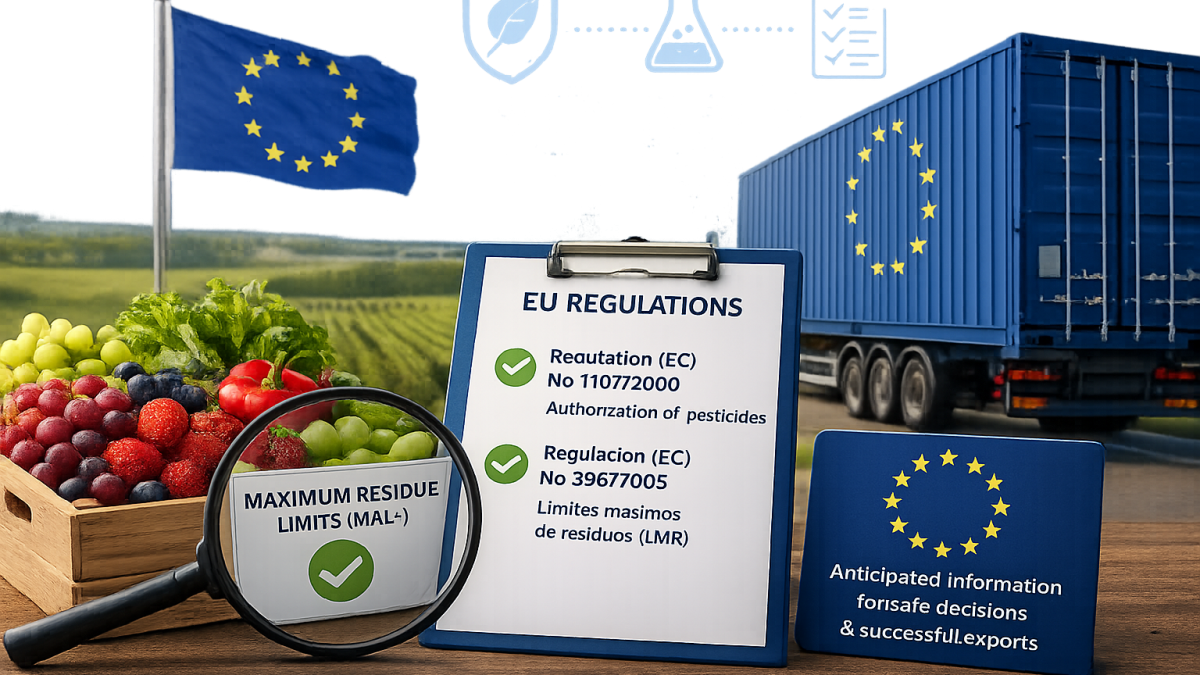
The constant updating of Maximum Residue Limits (MRLs) in the European Union requires greater technical monitoring to prevent rejections, reinforced controls, and trade disruptions.
According to information presented by AGRINFO, a platform specialized in monitoring agri-food regulations, maximum residue limits (MRLs) for pesticides in the European Union are continuously updated. As a result, agricultural exporters must closely monitor regulatory changes that may affect their products. These limits establish the maximum amount of pesticide residues legally permitted in food products destined for the European market.
Changes to MRLs may directly impact export planning, since an agricultural product that currently complies with applicable requirements could face new conditions if the permitted limit for an active substance is modified. According to the information presented, MRLs may change due to periodic reviews, import tolerance requests, alignment with international standards, or when a pesticide is no longer authorized in the European Union. In general, once a new MRL is published, it usually becomes applicable approximately six months later.
European regulations distinguish between the authorization of substances used in plant protection products and the residue limits permitted in food products. European Regulation No. 1107/2009 governs the authorization and use of plant protection products, while European Regulation No. 396/2005 establishes the rules regarding maximum residue limits. This distinction is relevant for exporters, as a substance may face regulatory restrictions that later lead to adjustments in the MRLs applicable to certain products.
One of the main challenges for exporters is the timely monitoring of these changes, considering that, according to AGRINFO, modifications are made each year to the MRLs of more than 90 substances. In addition, the European Union may strengthen import controls when risks associated with pesticide residues, contaminants, or other non-compliance issues are identified. These controls may include sampling, laboratory analysis, official certificates, or physical border inspections. Such measures can lead to delays, higher costs, reputational impacts, and even temporary restrictions on access to the European market.
For the Costa Rican export sector, proactively monitoring these changes is essential to identify new market access conditions in a timely manner and assess whether adjustments are necessary before modifications enter into force. This may involve reviewing agricultural practices, replacing active substances, coordinating with buyers, or preparing technical documentation according to new requirements. VUCE highlights the importance of exporters staying informed through technical sources and regulatory monitoring tools. Interested parties may consult the official AGRINFO website, where resources, alerts, and materials related to European Union agricultural and trade regulations are available.