




Central American Customs Committee Pro-Tempore Presidency Delivers Comprehensive First-Semester Results for 2026
13 July, 2026European Union Updates the Scope of Products and the Electronic System under the EUDR

The European Commission has adopted new measures to support the implementation of the European Union Deforestation Regulation (EUDR). The update includes changes to the list of products covered by the Regulation, as well as new rules governing the electronic system through which due diligence statements are submitted.
The EUDR aims to ensure that certain products placed on the European market are not associated with deforestation or forest degradation.
Among the main changes is the inclusion of instant coffee, certain palm oil derivatives, and frozen bovine tongues. At the same time, products such as bovine hides and skins, soybeans intended for sowing, and certain rubber products, including retreaded tires and conveyor or transmission belts, have been removed from the Regulation’s scope.
The Commission also clarified that samples and products used exclusively for analysis, examinations, or testing will not be subject to the Regulation.
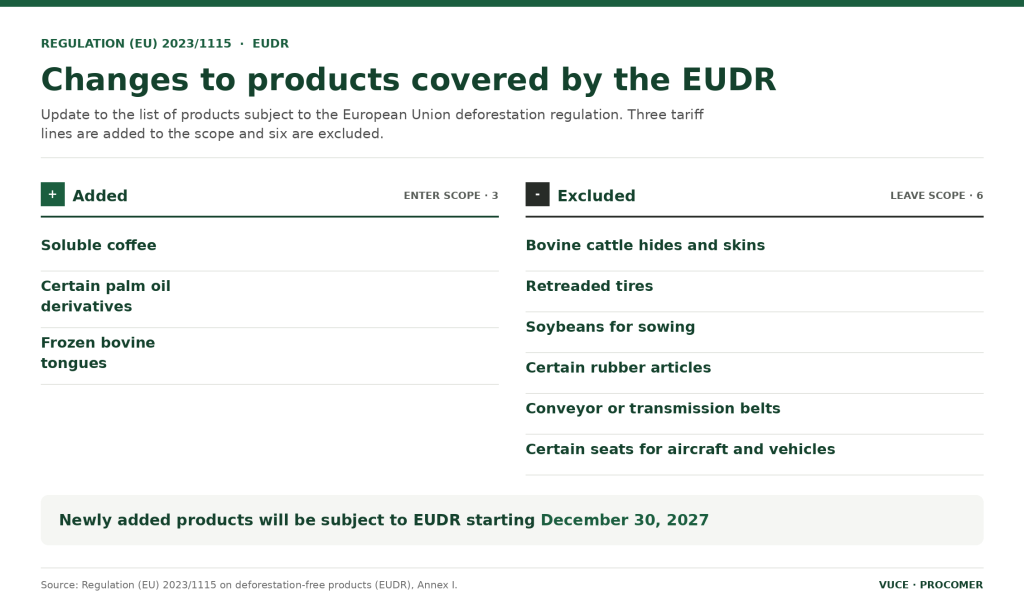


To provide businesses with additional time to prepare, the newly added products will become subject to the EUDR starting 30 December 2027.
The delegated act will undergo a two-month review period by the European Parliament and the Council. If neither institution raises any objections, the amendment will enter into force in December 2026. However, the obligations for the newly incorporated products will only begin to apply on 30 December 2027.
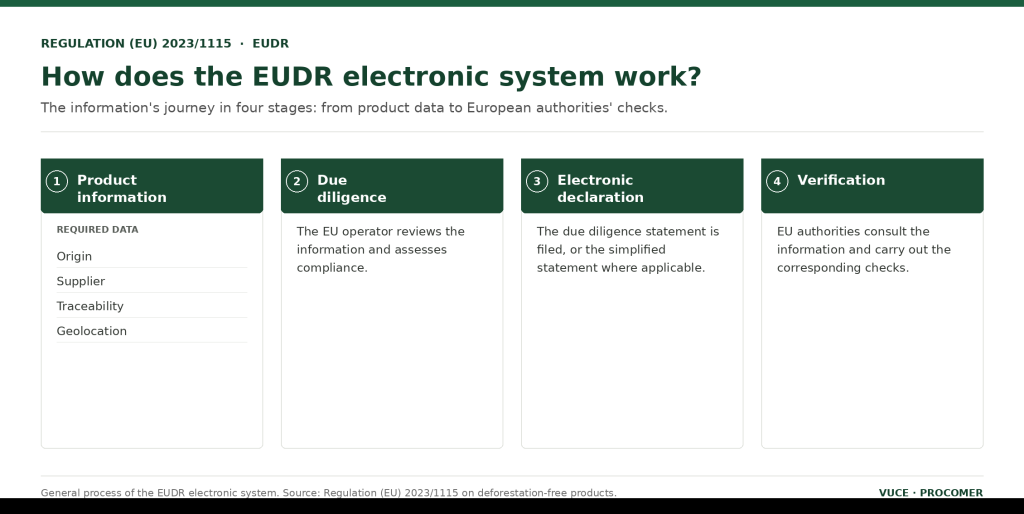
The European Commission has also established the operating rules for the electronic system through which European operators submit and manage due diligence statements. The platform will introduce simplified declarations for certain small operators, along with new functionalities and options to automate information submission.
For Costa Rican companies, the most significant implication is that their European buyers or importers may request complete and verifiable information regarding the origin, traceability, and geolocation of products to comply with the obligations established under the EUDR.
These changes are particularly relevant for Costa Rican companies exporting products covered by the EUDR or participating as suppliers in supply chains destined for the European market, especially for the coffee sector due to the inclusion of instant coffee.
Companies are encouraged to review the classification of the products they market, maintain close communication with their European buyers, and prepare in advance the traceability information that may be required.
To learn more about all the changes, please consult the official publication of the European Commission.